
Case 1: Reconstruction Plate
Tanı: Custom reconstruction plate treatment was planned for the patient who underwent bone resection in the corpus region due to the fracture of the standard reconstruction plate as a result of trauma.
Diagnosis & Planning
Custom reconstruction plate treatment was planned for the patient who underwent bone resection in the corpus region due to the fracture of the standard reconstruction plate as a result of trauma.
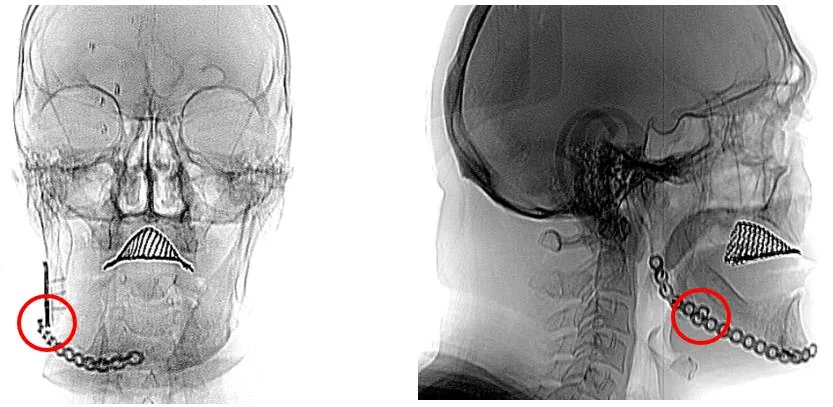
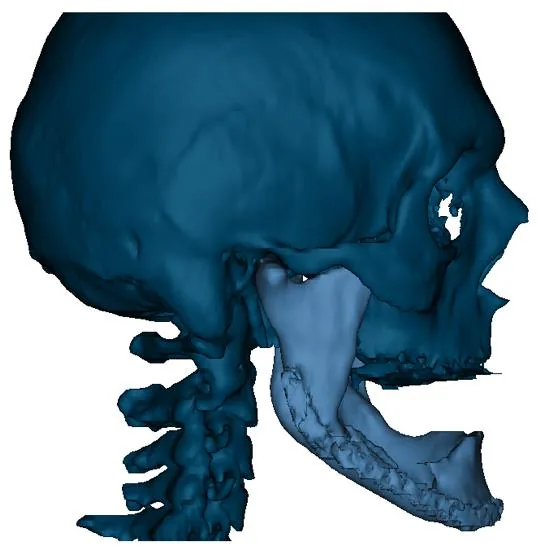
Anatomical bone models were created from patient DICOM data.
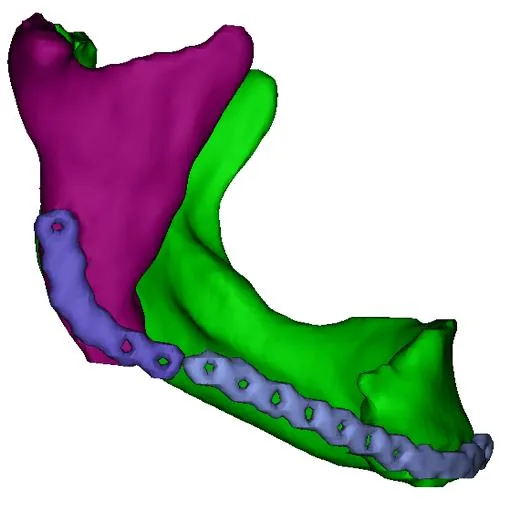
The right condyle, which was displaced after the fracture, was anatomically positioned by simulation.
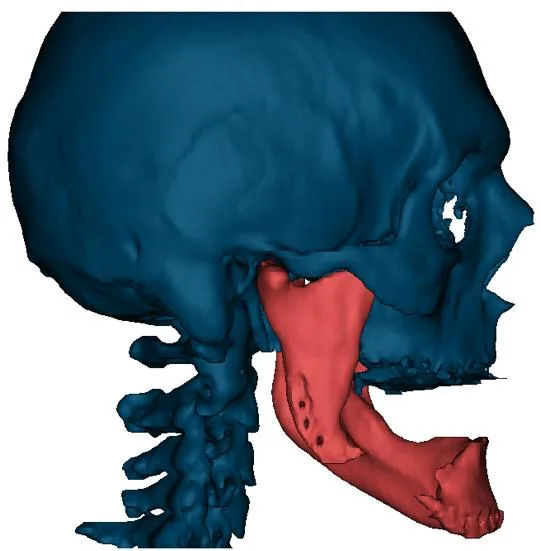
The patient's broken plate was removed to reveal the mandible bone morphology.
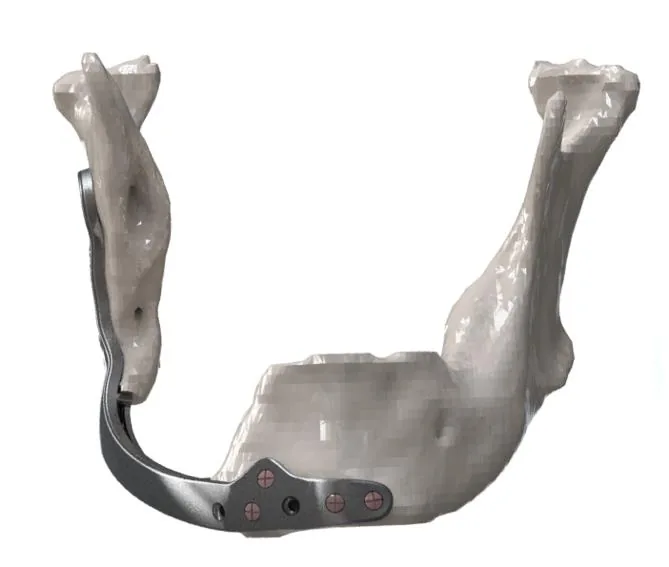
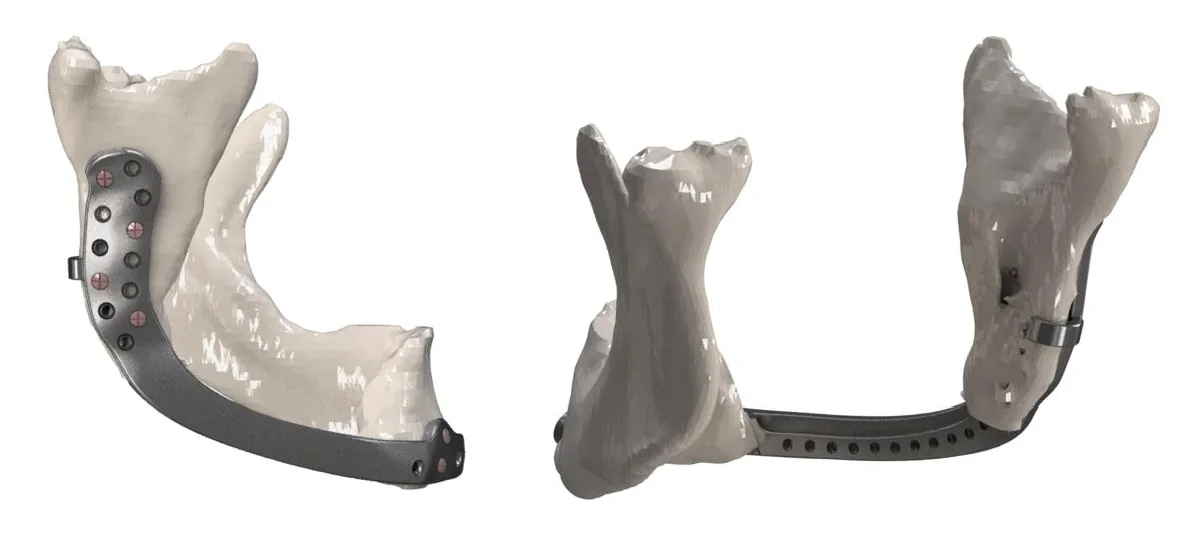
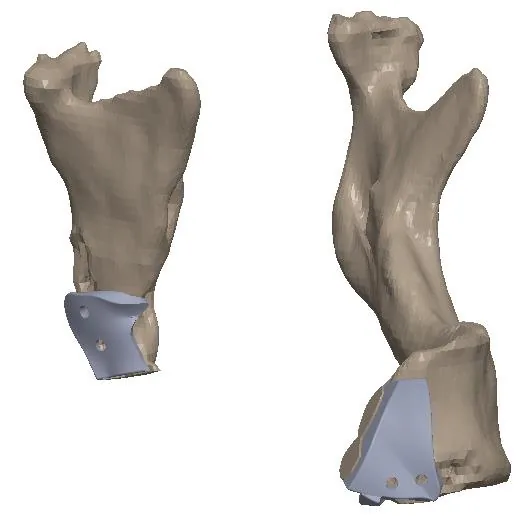
Guide Design
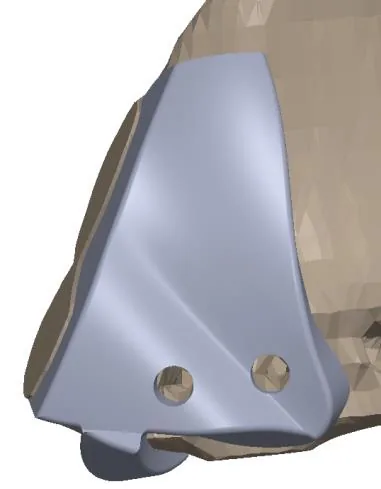
Guides that will make the incisions were designed for the correct positioning of the custom plate.
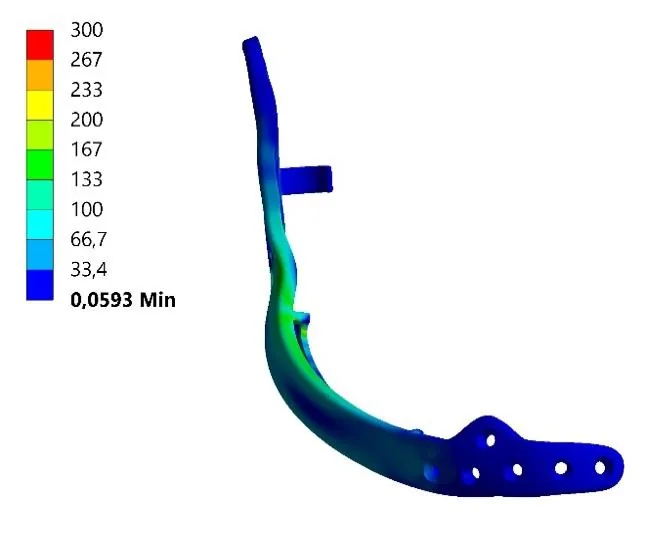
Finite Element Analysis (FEA)
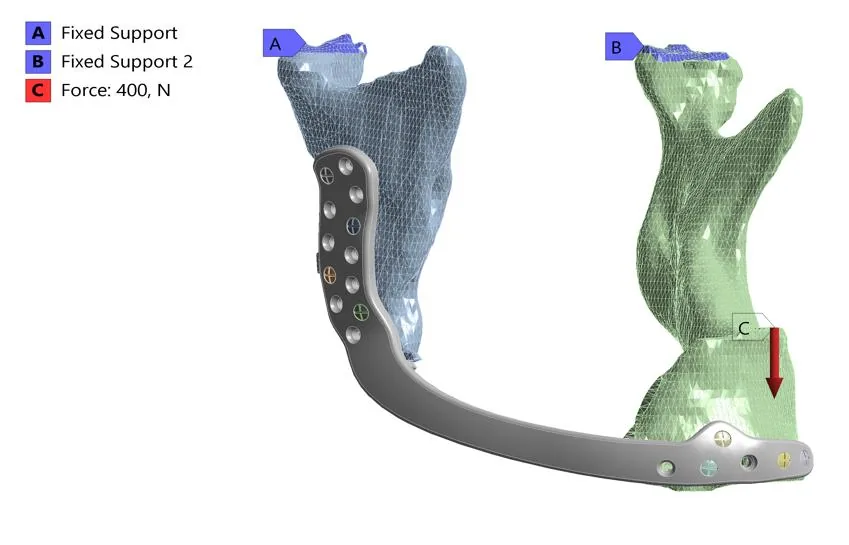
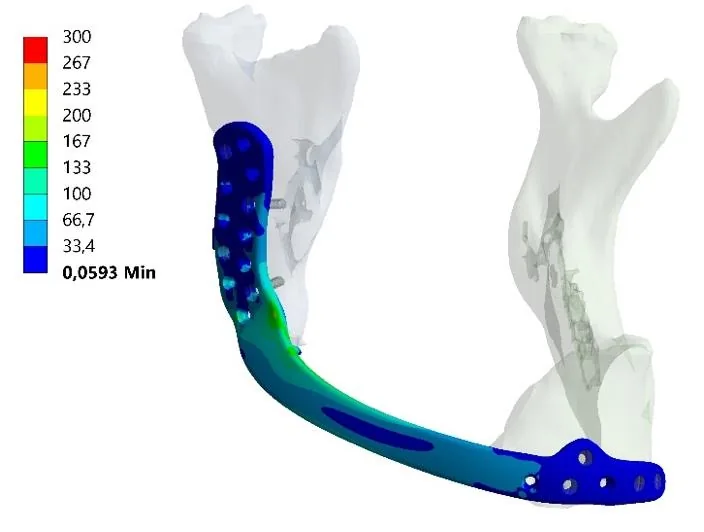
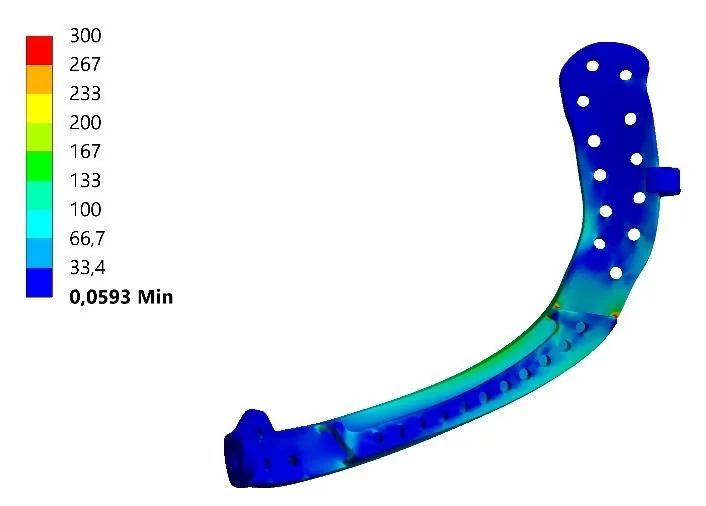
Analyses of the designed plate were performed nonlinearly in ANSYS software.
Before the analysis, the plate, whose mesh model was created, was analyzed under boundary conditions.
Medical Ti6Al4V-Eli mechanical properties were taken from the manufacturer, and the bone structure from the literature.

Production and Post Process
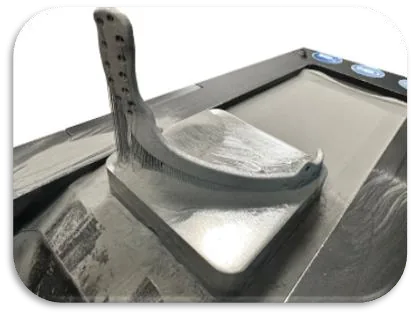
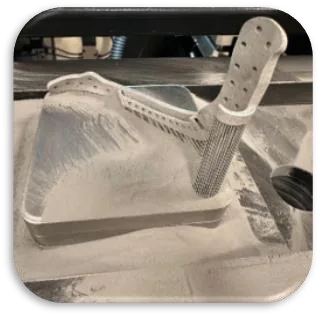
Additive manufacturing of the plate
The plate was produced using the Selective Laser Melting (SLM) method with medical Ti6Al4V-Eli alloy powder. The following parameters were used in production:
- Laser power: 80W
- Scanning speed: 1125mm/s
- Layer thickness: 25µm
- Hatch distance: 45µm
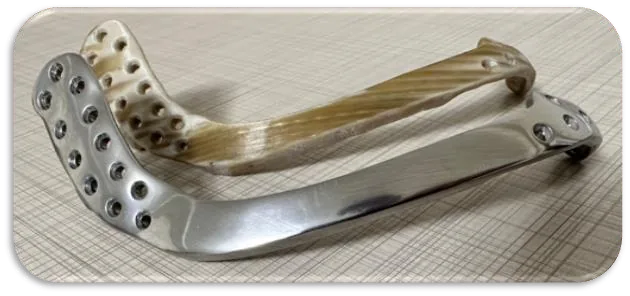
Production of hole guide from medical PEEK
The guide that will determine the hole locations was produced using the Fused Deposition Modeling (FDM) method in a cleanroom using medical PEEK (Invibio).
Post process operations
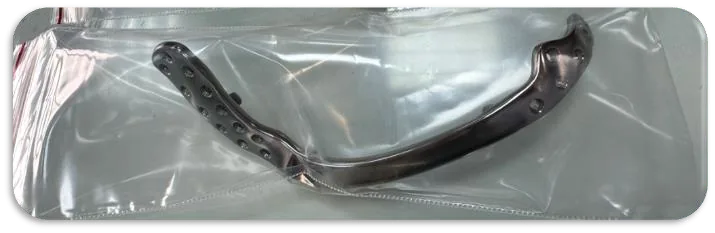
The implant was polished using grit 240, grit 400, grit 600, and grit 1200 SiC sandpaper respectively, and finally polished with a-alumina powder of 0.05 µm particle size.
After polishing, it was ultrasonically washed in alcohol at 53KHz frequency for 15 minutes at 26°C.